Feeds:
Posts
Comments

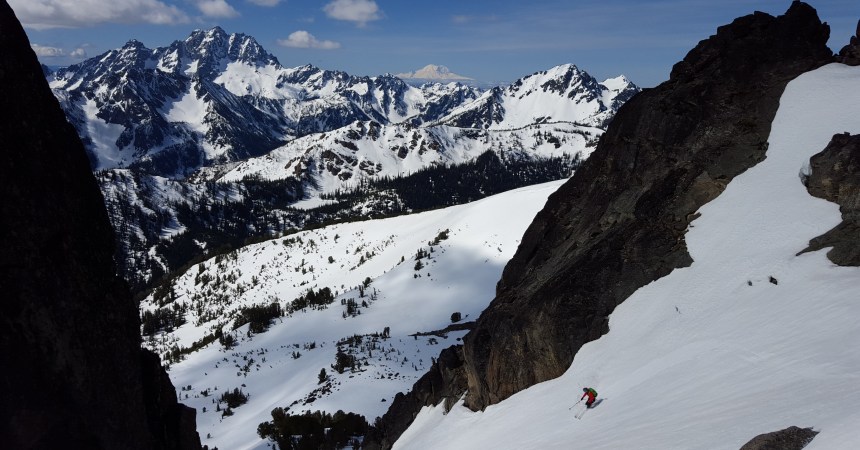
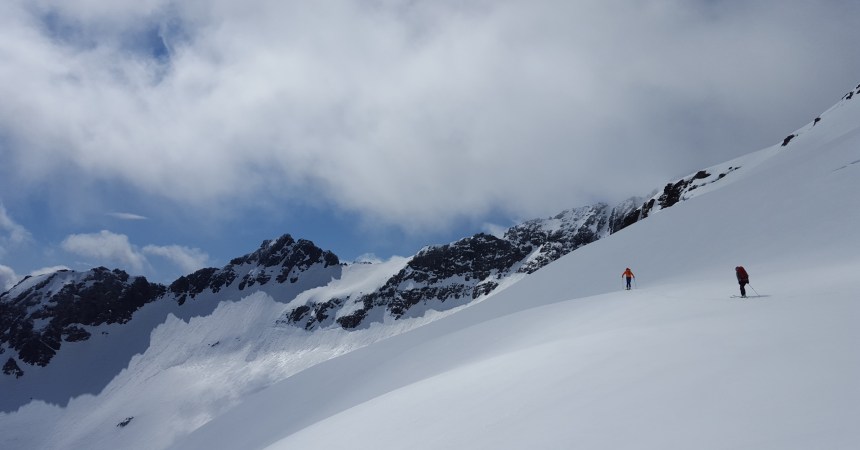
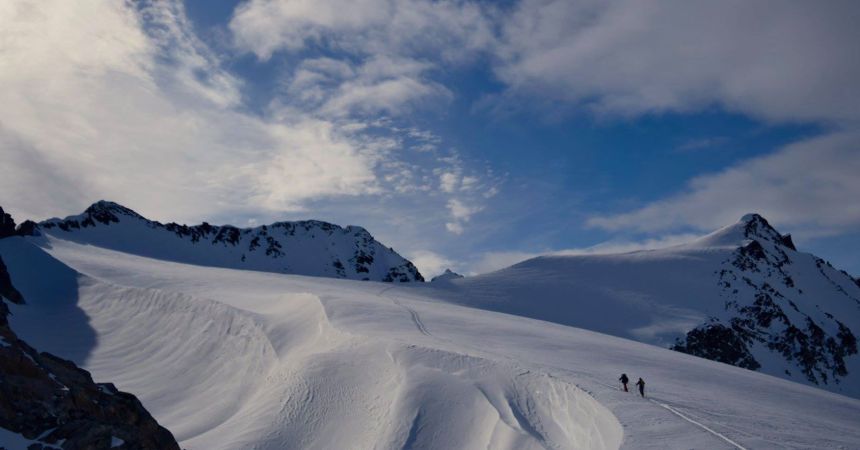
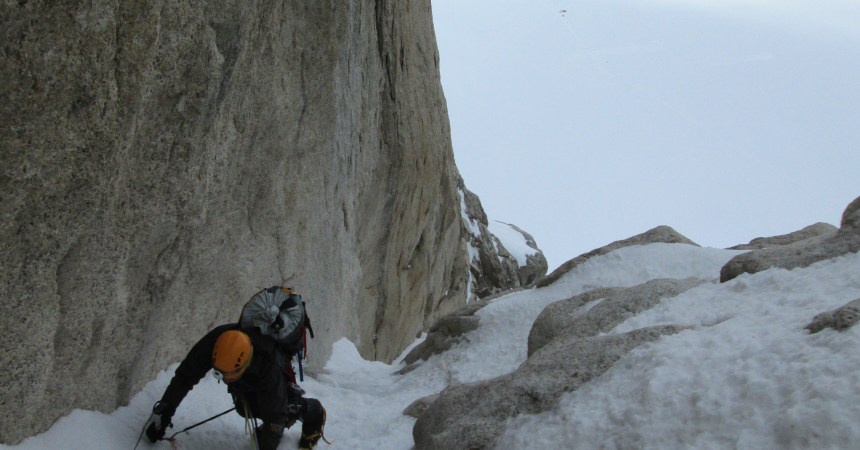
Last week I finished up one of my favorite courses that I get to teach–the Alpine Mountaineering and Technical Leadership Part 2.  In this course we get to develop our leading skills on rock routes, ice climbs, and glaciers and then apply them in real terrain in the mountains.  On this course we spent the first few days climbing ice on the lower Coleman Glacier of Mt. Baker, giving Abe and Dan a swing at their first lead climbs on ice (woohoo!) and a full day of crevasse rescue and glacier navigating.  Then we were off to the sunny rock Mecca of Leavenworth, where we climbed a number of routes including the ultra-classic Outer Space (5.9, 7 pitches).

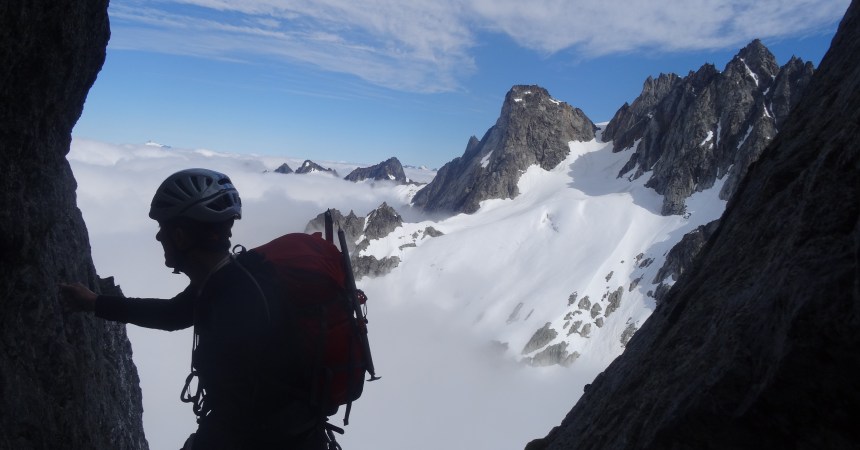
Following that, we headed to Washington Pass, home of the best alpine cragging routes in the state, and attempted a two day traverse of the entire Liberty Bell massif.  Much to our disappointment, the north facing routes were still quite snowy and cold and our progress was slowed considerably on the Patriot Cracks on Concord Tower, then the North Face of Lexington.  As such, we were only able to climbed 3 of the 5 towers in the group, arriving at the planned bivy site at 3PM…a little early for our tastes given the incredibly long days of mid-summer.  We then tried to cruise up North Early Winter Spire via the Chockstone/SW Route, but were thwarted by all of the snow in the upper gully pitches.  We opted to descend and camp in relative luxury down in the Methow Valley.

We rounded out the course with a handful of days cragging at Fun Rock in Mazama, the Goat Wall, and miscellaneous crags in the Leavenworth area.  What a fantastic trip!

This slideshow requires JavaScript.

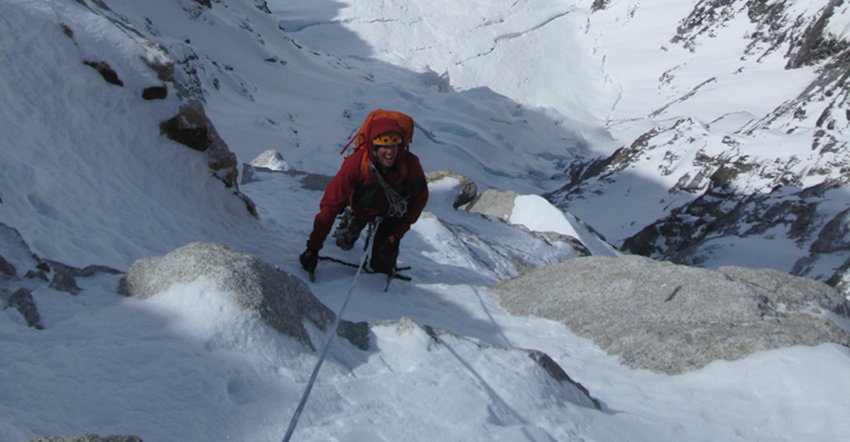
I just had the good fortune to spend a couple great days (and windy nights!) at Colchuck Lake in the Stuart Range.  Charlie and I were trying to escape some wetness on the west side of the Cascades and wanted to climb some steep snow and alpine ice.  Since we are just coming out of an excellent snow year, we knew that we could find steep, snowy terrain in the Dragontail Peak and Colchuck Peak couloirs and stay out of the rain.  Although our primary objective had been Triple Couloirs, a 3000′ snow and ice route up the center of Dragontail Peak’s north face, we opted out of it since the route was actively funneling rocks from the morning’s thaw.  A short hike further up Aasgard Pass led us to the base of an unsung Cascade classic route, the NE couloir of Dragontail Peak.  The couloir portion of this route features about 7 pitches of steep snow and ice, up to 60 degrees, and excellent rock anchors along the sides of the couloir.  We chose to descend before reaching the ridge crest (a long and convoluted alpine climb in itself) and rappelled and downclimbed back to the base of the route.  The NE Couloir is an excellent climb and should get done a whole lot more than it does!

Let the photos begin!

This slideshow requires JavaScript.

As I was sorting out my equipment last night for an upcoming climbing course in the Cascades, I realized that the packing process and the items that go into my pack are a topic that I should talk about more.  In this case, I’m going to be doing two technical climbs on Mt. Baker over the course of three days.  We’re planning on climbing the North Ridge (III, 70 degree ice, 3000′ gain) one day and the Coleman Headwall (IV, 60 degree ice, 3000′ gain) the following day; our alternate route plans include the Cosley-Houston route (III+, WI4, 1500′ gain) on the north face of Colfax Peak, a sub-summit of Baker, which is more technical and requires waterfall ice climbing and the Roman Mustache – Pencil Thin (III, 60 degrees, 2000′ gain).  All of this means that we need to pack equipment that is both light and versatile for the climbing and weather conditions that we will experience.

The pre-trip gear pile overwhelms the living room

This trip requires carrying a light load on the approach as to not tire us for the two long days ahead.  Given the coming weather forecast that is calling for reasonable June weather (mostly sunny days and moderate evening temps), I tailored my clothing and sleeping system to this end. Out went my heavier eVent jacket and in went my lightest shell jacket and pants.  There are three pairs of gloves in the pile somewhere, because gloves just don’t dry out in the Cascades this time of year and I want dry gloves each morning.  There are two pair of socks too since I want dry socks each morning and don’t particularly want to rely on drying out my wet pair each night in my sleeping bag.

Camping and guiding equipment

Our climbing equipment is also customized given the snow and ice conditions of this season.  We had a great winter last year and still have a lot more snow than is normal this time of year.  This means less exposed ice and more snow.  This translates into more protection for snow (pickets/axes) than ice screws.  It also means that I can carry lighter crampons since I only expect to climb a couple real pitches of hard ice.  I did bring two technical ice tools since I’ll move faster with two tools on the ice pitches instead of an ice axe and a technical tool like I take most seasons.

Technical gear

So what’s in there exactly?

  • 30L Cilogear pack with the 60L lid (it’s bigger than the 30L lid)
  • BD Cobra ice tools & Grivel Double Spring Leash (tool tether)
  • Petzl Irvis 10 point crampons
  • BD Couloir harness w/ 2 Petzl ice clippers
  • BD Turbo Ice Screws (2x 22cm, 4x 16cm)
  • Edelrid Madrillo folding helmet
  • 18′ 6mm cordelettes (2) / 5mm autoblock cord (1)
  • Petzl Attache lockers (3) / Trango Superfly locker (1)
  • BD ATC-Guide (new version)
  • Camp Photon (3, Awesome!) and Trango lightwire carabiners (5)
  • Mammut single slings (4) / Petzl triple sling (1) / BD double sling (1)
  • Metolius FS Mini quickdraws (2)
  • Rescue carabiner w/Tiblock and Trango Piranha knife
  • Mammut 8.9mm x 60m rope
  • La Sportiva Nepal Evo boots
  • BD Expedition flicklock trekking poles (2)

Camp

  • Integral Designs 8′x10′ Guide Tarp
  • BD 300cm avalanche probe (to probe for cracks on the glacier)
  • G3 AviTech shovel
  • BD winter bivy sack / NeoAir pad (full length)
  • REI SubKilo 20F sleeping bag (awaiting my new Feathered Friends bag!)
  • Jetboil  / 8oz fuel canister / titanium folding spork / Orikaso folding bowl
  • Platypus 100oz hydration bladder / 16oz wide-mouth Nalgene w/beer cozy
  • BD Storm headlamp
  • toothbrush / toothpaste / floss
  • Ursack Minor food sack w/ food (rodent-proof food bag)

Other Essentials

  • Garmin eTrex H GPS / Mt. Baker map / Suunto compass / map tool
  • Yaesu guide radio
  • sunscreen (2 oz)
  • 48oz collapsible Nalgene pee bottle
  • Biffy Bag (for Leaving No Trace)
  • first aid kit w/Sam Splint (unfold to beef up pack frame)
  • Aqua Mira
  • lighters (2)

What’s not pictured?

  • 24″ MSR snow pickets (2)
  • clothes (expect another blog soon)
  • food
  • Canon G12 camera

Of course, I want to pack all of this in a logical order.  I’ll delve into my packing system in another post in the future, but for now let’s say that I want it to be packed deliberately.  I want things to be packed in the reverse order of the way that I’m going to use them.  My shell jacket is on top, then my harness, then my gloves (my hands stay warm), then camping/sleeping stuff in the bottom.  The lid, or brains, of my pack has the navigation gear, 16oz water bottle, sunscreen, and some snacks…and the camera when the weather is too bad for it to be around my neck.

Ready to go!

I hope this helps you pack for your future trips.  Expect more blogs on this in the future.

I just returned from a week on the beautiful Kahiltna Glacier teaching a six day alpine mountaineering course for the American Alpine Institute.  Although we were hampered by unseasonably warm temperatures and deep isothermal snow (up to mid-thigh while on snowshoes!), we were able to explore the glacier, develop and refine some climbing skills, and do a whole lot of crevasse rescue practice.  Thanks to everyone for the great trip!

This slideshow requires JavaScript.

I’ve been into the phenomenal Alaska Range five times now, guiding for the American Alpine Institute on the West Buttress of Denali. This season I got to work with the Indonesian Seven Summits team for a couple of preparatory days around Kahiltna Basecamp and then climb the Buttress with this energetic bunch, a great guy from Dublin, an always upbeat woman from Poland, and two fantastic guides, Dan Otter and Aili Farquhar, both of Washington.  We had clear and cold conditions–one morning it was -35F with windchill– but very little snowfall and tolerable winds.  Our expedition’s timing happened to align really well with the weather patterns and we only suffered through one forced bad weather day while at Camp 3 (14,200′).

We summitted on May 15 at about 8PM (day 15 of the expedition) and proceeded to high-tail it off the mountain, flying out in the afternoon of May 17.  This was incredibly fortunate for us since the airstrip at Basecamp shut down because of bad weather almost immediately after we flew out, leaving parties who descended slower to sit around waiting for flying weather for nearly a week. Other teams that got stuck at the 14,200′ and 11,200′ camps suffered through 60mph winds and feet of snowfall.  Timing is everything in the Alaska Range!

Here is a highlight reel of my photos from the expedition.

This slideshow requires JavaScript.

I am available for private courses and ascents in the Alaska Range through the American Alpine Institute.  Contact me for more information.

Over the last few weeks I’ve been thinking about incorporating my own guide service…and I need a name!  If you’ve got a suggestion, please post a comment or shoot me an email.  Names can’t be already in use and they are preferably not taken online.

Let the suggestions flow!

Off to Denali

Hey folks,

I’m taking off in the morning to start a three week expedition on Denali.  Home to beautiful scenery, immense glaciers, and -40 degree temperatures, it is the highest peak in North America.  This year, as in years past, I’ll be guiding for the American Alpine Institute.  If you want to follow along with our expedition AAI will be posting dispatches to their blog that is located here:

http://aaidispatches.blogspot.com

Enjoy the spring and early summer–I’m sure going to miss the green grass and rock climbing!

Cheers,
Kurt

Follow

Get every new post delivered to your Inbox.