Feeds:
Posts
Comments

The CiloGear 30:30 in the Palisades of California

I’m a backpack collector.  Perhaps even the Imeldo Marcos of backpacks.  Each pack I own has features that distinguish it from the others (that’s what I tell my wife anyways) and I often spend a lot of time choosing which pack is optimal for a given trip into the mountains.   Over the years I’ve had packs from most domestic manufacturers and quite a few international companies in search of a pack that carries well, is light, and can withstand the serious abuse that I seem to subject my gear to.  I think I just found a pack that can replace (yes, replace!) a couple packs in the arsenal.  My wife and gear closet are going to thank me.

I’m really picky when I’m packing for fast-and-light summer alpine routes and my  technical guiding adventures.  Most packs are either too small or are too heavy.  I hate having stuff outside my pack (except my crampons and ice axe), since I hate looking like an over-prepared Boy Scout.  Fortunately, I think I found the solution this summer in the new CiloGear 30:30 pack.  Even if you read no further, just understand that it’s awesome.

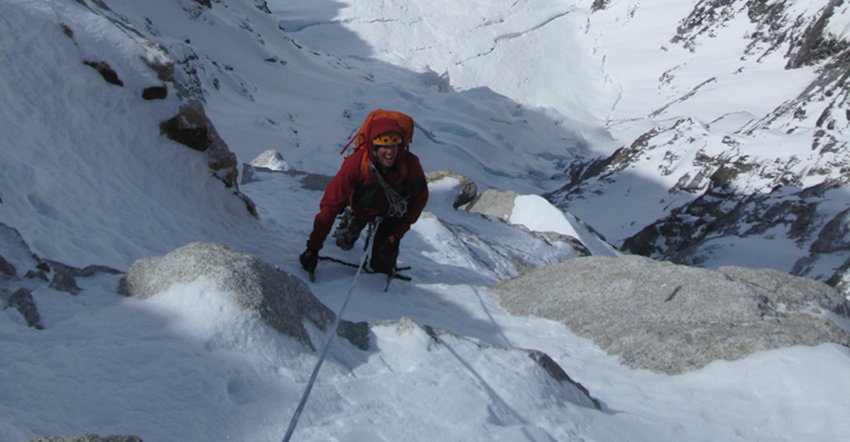
The 30:30 on the first ascent of The Misunderstanding on Mix-up Peak.

Sure, you say, Kurt you’ve been a CG fan for years.  True.  You know why?  Because CiloGear makes killer backpacks for alpine climbing, period.  I’ve been using them for about five years now and have loved each pack.  My first one was the V2 60 liter that I got back when they were based in New York and being produced in Turkey.  The next couple packs in my arsenal were 30Ls, 60Ls, and whatever I could borrow from friends (45s, a 75L, a 20L)—those loaning programs didn’t last long!  Five years later and I’m still psyched on them.

Anyways, late this summer I got my hands on a prototype of the new 30:30.  I’d been in the market for something a bit bigger than the 30L that I could use on overnight guiding trips in the alpine or for routes where I wanted to carry a big rack and the rope inside.  I’ve been using the 30:30 almost exclusively for the last four months and have a couple thoughts on it.

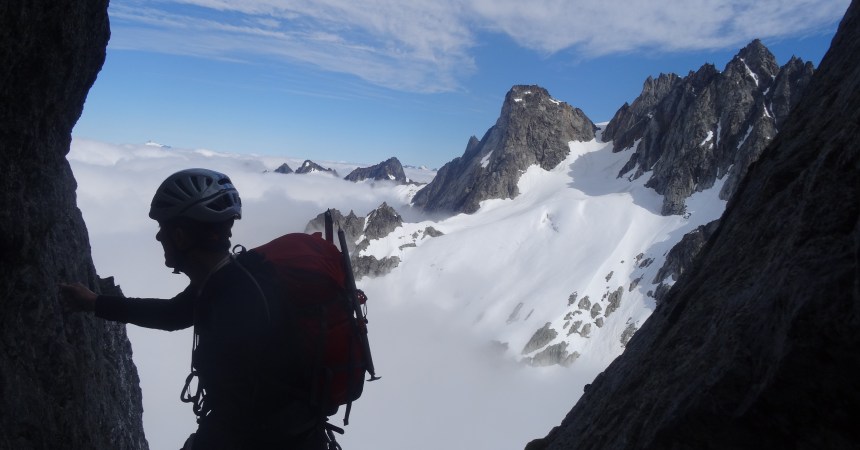
Adjusting the pack mid-route in the Sierra

Volume – It’s perfectly sized (about 40 liters) for carrying everything that I need for a multi-day alpine route.  Sleeping bag, pad, stove, rack, tent, guide-sized first aid kit, a luxury item (liter of wine)–it all goes in with room to spare.  I was even able to cram a bear canister into it while in the Sierra (I filled the canister too)…and then I stuffed a 60M rope, sleeping bag, pad, rack and clothing into the pack!  It cinches down to be about 20L (I think) and that’s perfect while climbing technical terrain.

Profile—A lot of packs are too short and squat or are a towering top-heavy mess.  Neither of these profiles work well on technical terrain. The short ones put the weight far from my back and change my center of gravity, while the top heavy ones put the weight on my shoulders, making me feel like I’m teetering like a dirtbag on his way home from happy hour.   The 30:30 is a good compromise for me. It’s taller (but skinnier) than the 30L, but not as wide as the 45 and 60Ls.  I can fully articulate my arms without the pack hindering movement, something I appreciate when I’m thrutching up grovel-ey alpine thrashfests.  I know that I’m going to dig it while swinging ice tools this winter.

Waist belt—I like packs with removable waist belts since they get in the way of a harness. I also try to avoid climbing technical terrain with a pack that’s so heavy I need a waist belt.  The 30:30 comes with the standard 30L waistbelt that I find quite comfortable.  However, there is a new Pod Hipbelt system that has a 1.5” webbing belt with two removable hip pads that’s better.  It feels just like the standard belt on the approach, but with a little work I can strip it to just the webbing belt while on route. And it’s super light.  Awesome.

The lid—I like a big lid on a pack. I want all my navigation gear, lunch, radio, and other necessities within easy reach. The 30:30 comes with a good-sized lid.  It’s larger than the stock 30L lid, but smaller than the 60L lid and has a big opening that makes it easy to get into.  Of course, it’s possible to swap any other CiloGear lid onto it as well.  Well done.

The suspension—All the packs I’ve gotten from CiloGear carry extremely well.  I’ve got a longstanding issue with my collarbone and these packs are the only ones I’ve used in the last five years that aren’t painful after a couple hours.  Anyways, the 30:30 comes with the standard CiloGear foam bivy pad…but there’s more! A new option here– an optional inflatable pad that can be combined with or swapped out for the foam pad.   It’s like a tiny inflatable sleeping pad—super light and super comfortable.  The air pad made my pack way more comfortable since the pointy items in my pack (cams, ice screws, tent poles, etc), were cushioned more than with the bivy pad alone.  It comes with a little bulb to blow up the pad, but it’s easy enough just to puff into the hose to inflate it.  On approaches where I had a heavier pack and needed more support, I used the foam and inflatable pads together to make a system capable of carrying 40 pounds (though only for a few hours).  The two pads together are also a reasonable option for a light alpine bivy pad combo for my sleeping setup.

Approaching Sahale Peak with a loaded pack

My complaint?—I really like packs with a crampon pouch on the outside (especially 25-40L size range).  I think strap systems are tedious and I’m tired of poking holes in my stuff when I put crampons on the inside.  The pouch is also a great place to store poop bags on the hike back to the car. So I would like to see one of those.I ask a lot from my packs.  It’s nice to have one that excels in a variety of uses…from alpine guiding to ice climbing to glacier slogging.  I see the 30:30 becoming my go-to pack for all of my one to three day mountain adventures for quite a long time–much to the chagrin of the other packs in my gear closet.

Quick Stats
Item:  CiloGear 30:30 backpack
Days used: about 50
Locations used: Sierra, Cascades
Volume: about 40 liters
Yea or Nay?   Yea!

Autumn is a dynamic season in the Cascades.  With finicky weather that is rapidly transitioning—from the perfect rock climbing days of late summer to the rainy-ness of fall—all types of mountain activities are possible.  The key is to watch the weather and match the activity with the forecast.  Last week my friend, and co-guide, Forest McBrian and I went on a backcountry ski mission to Mount Baker after seeing two days of precipitation accompanied by low snow levels in the forecast.  We were not to be disappointed!

After a really reasonable start from Seattle (6AM!), we found ourselves at the Hogsback Camp on the north side of Mount Baker around 9:30AM.  Approach conditions were perfect and we hiked to the bottom of the glacier in tennis shoes under cloudless and windless skies.

There were about eight other skiers in front of us and various skin tracks criss-crossed up Heliotrope Ridge.  They made our 1000 vertical foot laps quick and efficient.

The conditions were good; no, wait, they were excellent.  We skied a few laps, chasing the last shaded north-facing aspects to harvest the best snow into the mid-afternoon.

Let’s hope that it was the first of many great days this coming ski season!

Glacier Peak should be on every Cascade mountaineer’s tick list.  While folks averse to walking might complain about the long approach (about 15 miles each way), it is perhaps the most scenic and ecologically diverse that I’ve ever done in the Cascades.  Our trip began with a seven mile bike ride up the closed USFS 49 road, since it was temporarily closed due to a miniscule washout.  The biking was quite reasonable and went quickly with mountain bikes and pull-behind trailers.

Biking up the road. Unfortunately, I didn't have a trailer.

After we stashed the bikes at the end of the road, the hike begin on a well-maintained trail along the North Fork of the Sauk River, wandering through an incredible old growth forest that houses some of the biggest trees I’ve ever seen. We spent the first night camping near the historic Mackinaw Shelter and prepared for an early start the next day.

Massive trees along the Sauk River

The morning found us climbing up a series of switchbacks in the cool morning air before we gained a long traverse out to White Pass.  The wildflowers (Tiger Lily, Columbine, Lupine, Paintbrush, and lots more!) were blooming in the meadows just below the pass and made each turn an exciting proposition. Beyond the pass, the trail was snow-covered and we made our way to Foam Pass and our first real views of Glacier Peak.

Taking in the view.

A couple hours later we settled into a great bivy site near Glacier Gap and prepared for our alpine start.  Clear skies boded well for us and in the morning we found perfect cramponing conditions from the very first step onto the snow.

Crampons on at the Gerdine Glacier

The Gerdine Ridge is a better-than-average moderate volcano route.  Most Cascade volcano routes are loose and chossy, while the Gerdine is primarily compacted pumice and somewhat solid rock.  All of the tedious scrambling sections are easily bypassed to the east on snow, which I highly recommend.  Around 8000′, we left the ridge and traversed northeast on the Gerdine Glacier to an obvious col where it intersects with the Cool Glacier.  Easy travel on a largely uncrevassed glacier then led to a pumice saddle, which we used to gain the final headwall, a nice 35 degree snow climb, and hit the top in just five hours from camp!

The Cool Glacier and the summit

On the final headwall with Gerdine Ridge behind

Mike on the summit

The descent back down the route was uneventful and presented incredible views from Mt. Stuart to Mt. Adams to the Olympics.  Back in camp, we settled in for a fantastic and warm afternoon of napping and eating in preparation for our early start the coming morning.  The hike out was surprisingly fast, even with a couple of detours (I have an inability to walk past granite boulders), and a nice nap at the Mackinaw Shelter.  The last half hour of the trip was perhaps the most leisurely of all–speeding down a gravel road with a full backpack pushing you along!  What an incredible trip!

A little granitic bouldering near Glacier Gap

Ron getting back to White Pass

Back to the car at 30mph!

Glacier Peak climbs are offered from late June to August every year.  Contact me for more information.

The Garda hitch is a very useful tool for crevasse rescue, ascending a rope, or hauling a pack or small haul bag.  It works by pinching the climbing rope between two carabiners.  It is important with the Garda that the loads be static in nature (do not use it for belaying), and that the carabiners used are identical in size (non-lockers are best).

Here is a short, non-exhaustive, primer on the Garda that I filmed during a recent Alpine Mountaineering course on the Kahiltna Glacier of the Alaska Range.  As with all new skills, tying and using the Garda Hitch requires practice and proper application.


Expect more Skill Series posts and videos in the coming months!

I just have time for a quick photo journey up the Fisher Chimney route on Mt. Shuksan that I did with Adrian and Juan a couple weeks ago.  The Fisher Chimneys is a beautiful line, with a very reasonable approach, that offers varied and interesting climbing throughout the year.  From a beautiful valley approach, to fun and easy climbing in the Chimneys, then a bit of steep ice, glacier walking, and a fine summit rock ridge, it’s the definition of a well-rounded alpine route.  On our trip, we found excellent conditions on the route itself, although we did spend a couple days near Lake Anne waiting for the rain to cease before we started up.  A highly recommended trip!

This slideshow requires JavaScript.

Backcountry mountaineering, you say?  How is that different from traditional mountaineering?  Well, it’s in the approach distance.  Most mountaineering trips in the Cascades require a few hours of hiking to get from the car to a high camp, usually on well-maintained trails and easy sub-alpine terrain.  This isn’t the case for my upcoming objective; I’m headed into the most remote volcano in the Cascades this week–Glacier Peak–and have a 20 mile one-way distance car-to-summit to contend with.

So how does my strategy change for backcountry mountaineering?  Initially, I wasn’t thinking that there would be much of a difference, but there must be given the amount of time I’ve spent with my gear today.  My main concern, as usual, is weight.  There are other factors that are conspiring to have me leave some standard items out of my pack.  We have to ride mountain bikes about 7 miles up a closed gravel road to reach the trailhead, so I want a pack that is quite compact and balanced, so that it doesn’t push me around while peddling uphill.  We’re also concerned with the potential for sub-optimal trail conditions (downed trees, creek crossings, etc), so I’m looking for a streamlined pack where I don’t have much, if anything, hanging off the outside of the pack.

The climbing along our chosen route–the Disappointment Peak Cleaver with variations onto the White Chuck, Gerdine, and Cool Glaciers–is of moderate technical difficulty, especially considering that it’ll still be blanketed in a ton of last winter’s immense snowpack.  As such, I’ve gone with aluminum crampons, my lightest harness, and lightest helmet to shed some serious weight while still carrying the essentials.  I did bring an ice axe when a Black Diamond Whippet ski pole could probably suffice.

So what’s in there exactly?

The "made it" pile (before final tweaks)

Clothing System

  • The North Face short sleeve synthetic shirt (5 oz)
  • Eddie Bauer/First Ascent windshirt (5 oz)
  • Patagonia Grade 6 Gore-tex jacket (12 oz)
  • Montbell Thermawrap synthetic puffy jacket (12 oz)
  • Patagonia Rock Guide pants (10 oz)
  • Patagonia synthetic boxers (3 oz)
  • Marmot Precip rain pants (12 oz)
  • 2 pair Smartwool Mountaineer socks (10 oz)
  • Outdoor Research Gripper gloves (3 oz)
  • Black Diamond Sensei gloves (8 oz)
  • K2 Aviation baseball hat (3 oz)
  • Marmot beanie (2 oz)
  • Buff  - Merino wool (2 oz)
  • La Sportiva Nepal Evo boots (5.5 lbs)
  • Julbo Explorer sunglasses (2 oz)

Camping System

  • Cilogear 60L Worksack (3 lbs 1 oz)
  • Feathered Friends Lark sleeping bag 10 degrees (2lbs 3 oz)
  • Thermarest Women’s Prolite pad (16 oz)
  • Big Agnes Fly Creek UL2 tent (38 oz)
  • Jetboil PCS w/one 8oz fuel canister (15 oz + 13 oz)
  • Platypus 100oz water bladder (4 oz)
  • 16oz wide mouth Nalgene (5 oz)
  • Orikaso folding bowl (1.5 oz)
  • REI titanium folding spork (0.5 oz)
  • Ursack Minor food bag w/ food (9 lbs, 10 oz)
  • Mini toothbrush, trial-size toothpaste, pre-cut floss (1.2 oz)
  • Aquamira water purification (2 oz)
  • Small bottle of Off! insect repellant (2 oz)
  • Refillable bottle of sunscreen (3 oz)
  • 2 Banana Boat chapstick (1 oz)
  • Lighter (0.7 oz)
  • Biffy Bag (2.5 0z)

Technical Equipment

  • Camp XLH130 Harness (3 oz)
  • Grivel Air Tech Racing Aluminum Crampons (1 lb 7 oz)
  • Grivel Air Tech Racing 63cm axe (16 oz)
  • Black Diamond Expedition trekking poles (1 lb 6 oz)
  • Petzl Meteor III helmet (8 oz)
  • MSR Coyote Picket (13 oz)
  • 3 Camp Photon carabiners, Petzl triple sling, Petzl Attache 3D locking carabiner, Metolius FS Mini carabiner, Camp Mini-autolocking carabiner, waist prussik cord, Petzl Tiblock, Trango Piranha alpine knife (14 oz)
  • Mammut 30M ½ rope (2lbs, 12 oz)
  • Black Diamond dyneema double length sling (2 oz)

Guiding Equipment

  • Casio digital wristwatch (1 oz)
  • Yaesu VX-7R radio w/AA battery adapter (11 oz)
  • iPhone w/battery recharger & cable (8 oz)
  • Glacier Peak Map and beta (4 oz)
  • Garmin eTrex H GPS receiver w/spare batteries (6 oz)
  • Suunto Ranger compass (2.5 oz)
  • Black Diamond Storm headlamp (7 oz)
  • Rite-in-the-Rain notebook, mechanical pencil (3 oz)
  • First aid kit w/ roll of athletic tape, SAM Splint, Liquid Band-aid (17 oz)
  • Homeopathic remedies (Arnica, Rhus Tox, and Apis) (1 oz)
  • Epi-Pen w/Benadryl taped to it (2.5 oz)
  • Repair kit (Gorilla Tape, pack waist buckle, thermarest patch, goretex patch) (2 oz)
  • Canon G12 camera (14 oz)

What’s not pictured?

  • Rope
  • Picket

Of course, I made a few concessions in my ultralight strategy.  I brought two pairs of gloves and two pairs of socks since having wet hands or feet can make a trip really miserable.  I also threw in my iPhone so I could have music for the trail and a potential emergency communication link.  I swapped out my light Petzl Tikka XP for the Black Diamond Storm headlamp, so that I could navigate the darkness with confidence on our summit attempt.  Finally, after much self-torment, I brought my heavier sleeping bag (which added 7 ounces), so I could get a solid night’s sleep.

What would I comfortably change if I really wanted to?

  • Cilogear 45L Worksack for the 60L Worksack
  • Jetboil Sol Ti for my older Jetboil PCS (saves 7 ounces)
  • CAMP Nanotech Corsa ice axe for my Grivel Air Tech Axe (saves 7 ounces)
  • REI Womens Kilo Plus 35F sleeping bag (saves 7 ounces)
  • Thermarest NeoAir size medium for the Women’s Prolite (saves 3 ounces and is more comfy)

All systems go!

So what’s the total weight including what I’ve got on?  45lbs, 10 ounces
What’s the total pack weight without water?    36lbs, 8 ounces
How much will it weigh when I get back (no food, gas, sunscreen)? 26lbs, 1 ounce

Now all I have to do is hope that our summer weather has actually arrived and rest my legs!

I had the pleasure of guiding the Kautz Glacier route on the south side of Mt. Rainier from July 18-21, 2011.  We spent four days on the climb, spending one night at 8,200′ on the Wapowety Cleaver and two more at 10,500′ on the same feature (just below the aptly named Camp Hazard).  We were fortunate to experience pretty reasonable weather–given our current non-summer in the Cascades–and only had one day of mist and ping pong ball navigating conditions (and this was on the descent)!  Our summit day included a quick scamper underneath the Kautz Ice Cliff, some beautiful climbing through seracs at 13,300′, and a cloudless summit.  I’d like to say congratulations to the entire team for a job well done.  I’ll let the photos tell the rest of the tale.

This slideshow requires JavaScript.

Follow

Get every new post delivered to your Inbox.