Posts from the ‘Ice Climbing’ category

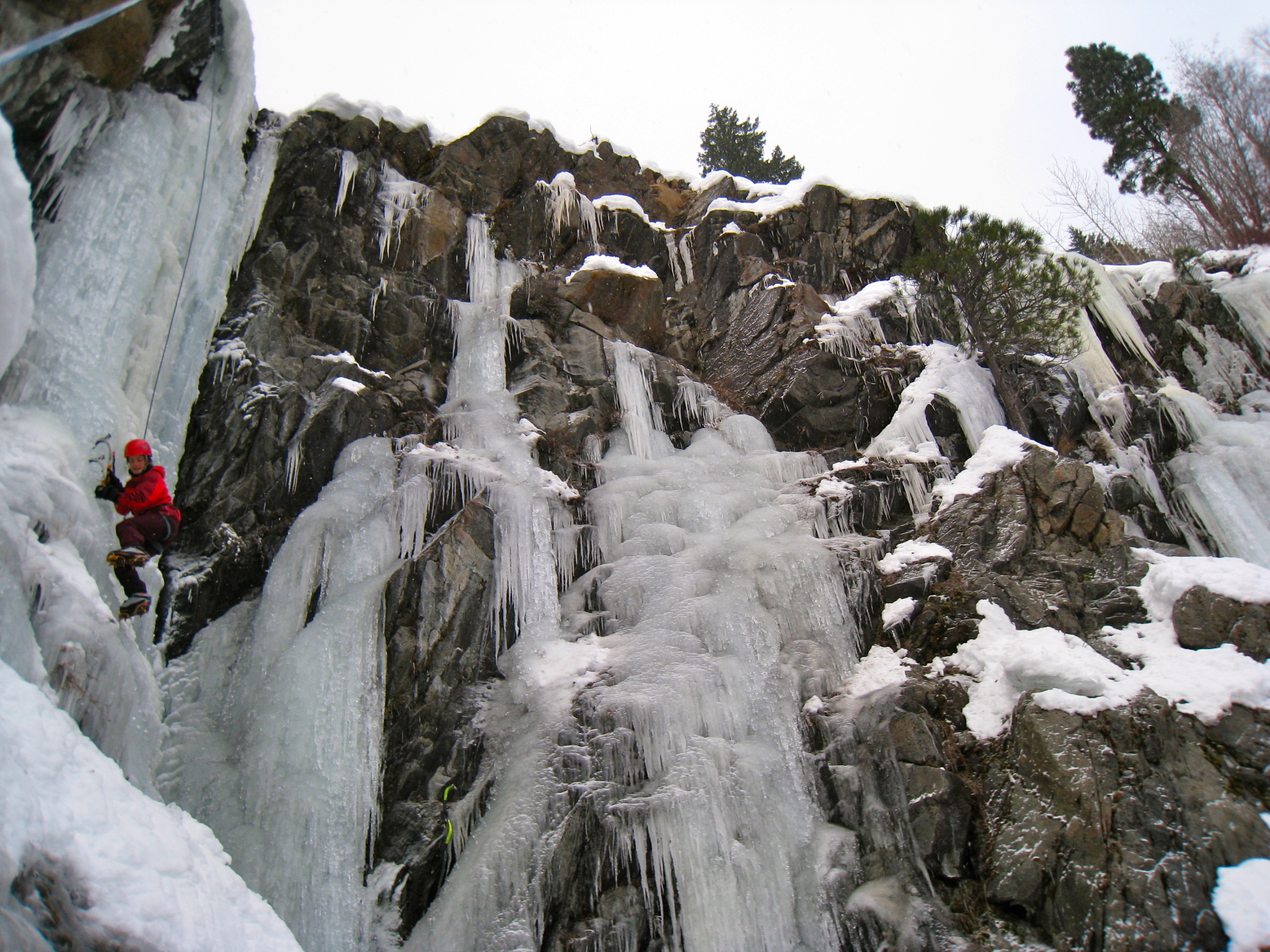
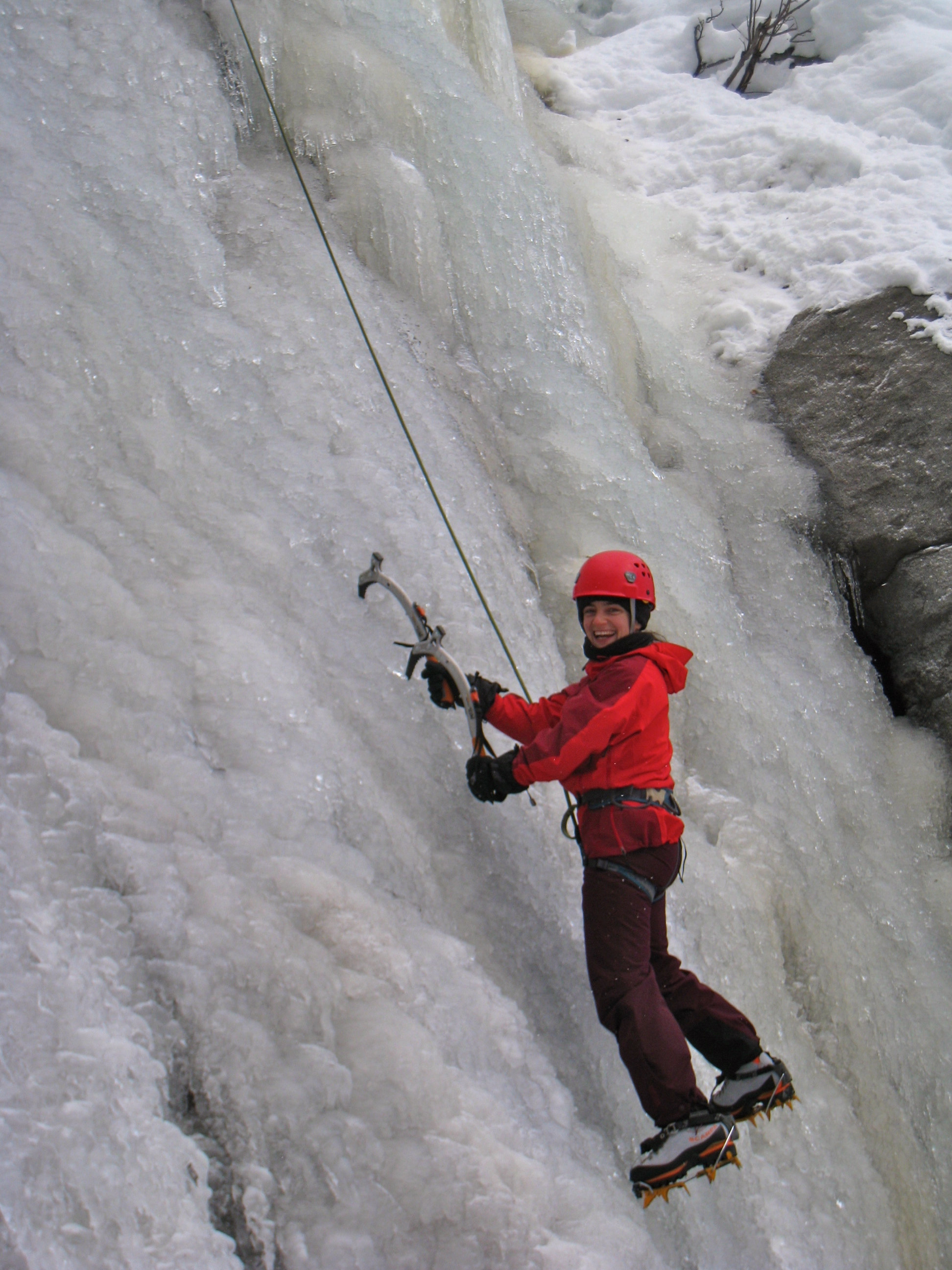
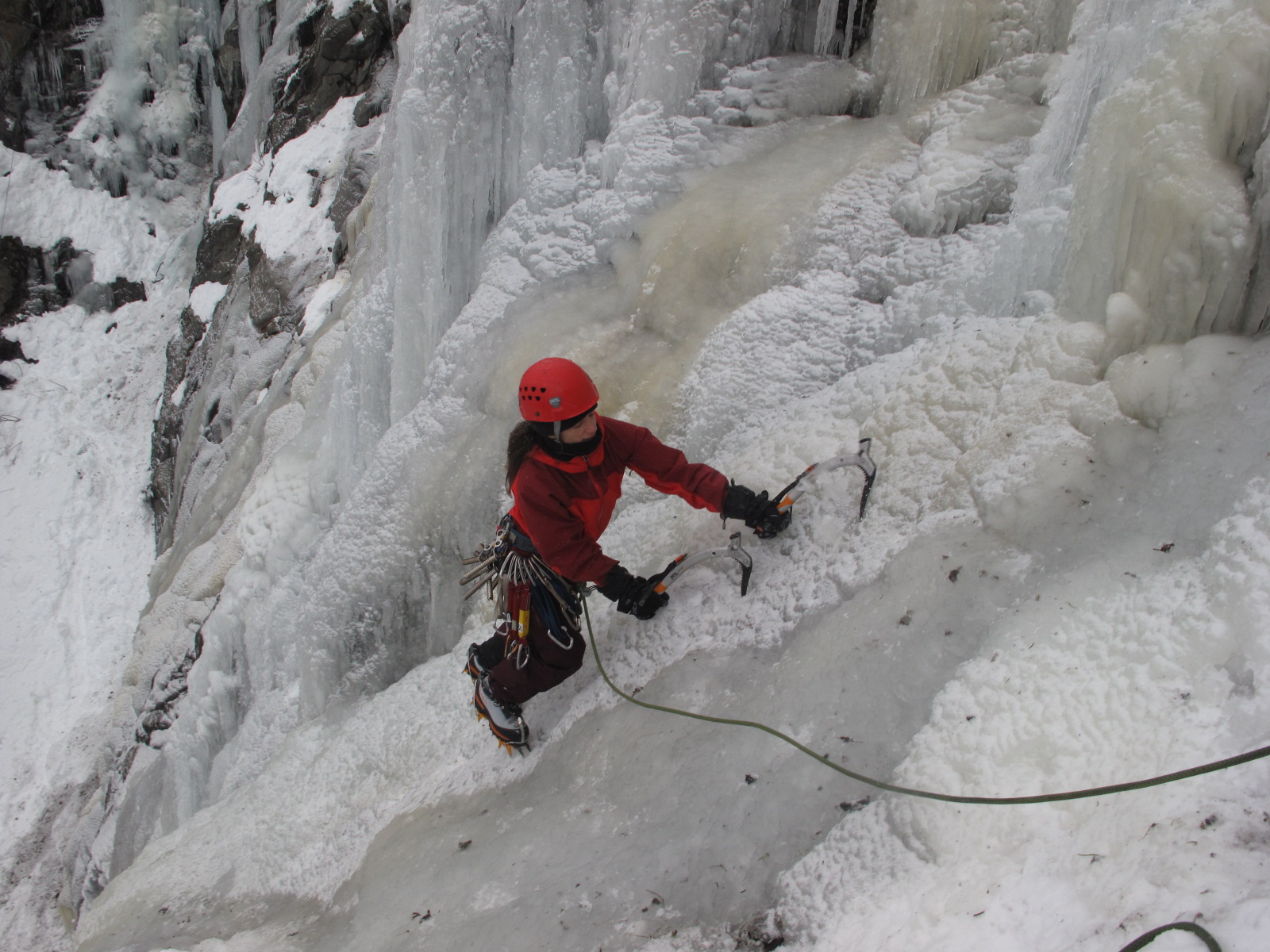
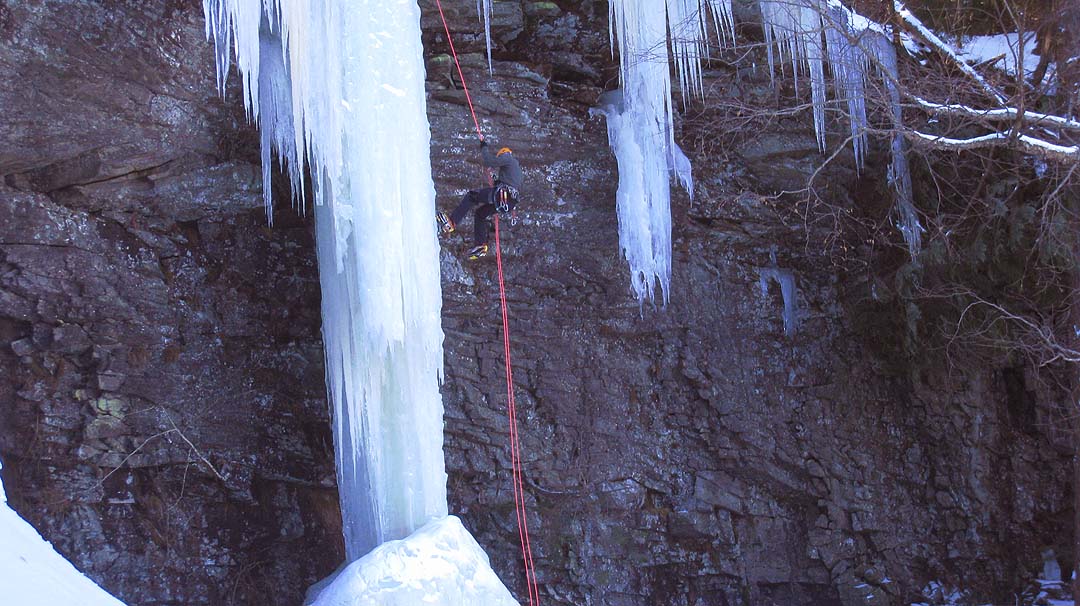
Last week I made a short trip to the Canadian Rockies–home to the best ice climbing in the world–to take the AMGA Ice Instructor Assessment.  This is a relatively new requirement for guides pursuing the AMGA Alpine Guides Certification, which I am.  Highlights of the trip included climbing some routes that I hadn’t been on in a long time, tying in with co-worker Andrew Yasso (a man who’s impersonations are second to none!), driving on the Icefields Parkway on a bluebird winter day, and getting to work with my friend (and AMGA examiner) Dale Remsberg.  I’ll let photos tell the rest of the story.

This slideshow requires JavaScript.


Below is basically a re-posting of a trip report I posted on the northwest climbing forum Cascadeclimbers.com.  I’ll add more details shortly.

—-

Given that the mid-winter’s high pressure had settled in and I heard that snow conditions in the Stuart Range were great, my friend Rodney and I climbed the elusive Cotter-Bebie route on the NW Face of Dragontail Peak on January 26 . I’ve been wanting to climb this route for many years, having peered down into it from Backbone and Serpentine a number of times. We found the route to be in fantastic shape overall, except for half of one pitch to the right of the Fin (requiring scary aid moves off ice tools). Gear was a challenge to find at times and we had to simulclimb on some serious terrain in order to find decent protection and anchors.

The route is excellent and I highly recommend it. We counted 20 roped pitches (though we simuled about 8 of them), and would rate the route (as we did it) in its current condition grade IV, WI4, 5.7, A2.  The route took us about 12 hours on the face, about three of which were spent on the aforementioned aid pitch and cornice chopping.

This slideshow requires JavaScript.

We were a bit confused as to where the route finishes. According to Beckey (CAG, v1, p 285), we followed the Northwest Face route. Washington Ice says to finish in the corner to the right of the Fin, but that wasn’t reasonable given the snow conditions. The gully we took proved to be the technical crux of the climb. I would consider finishing the route via the Third Couloir (by turning left at the Fin, and dropping onto the Gerber-Sink, then up into the Third Couloir) for a faster and more reasonable adventure.

Gear:  8 screws, set of stoppers, 2 bugaboos, .5-3″ camalots, 4″ hex, 10 slings. 2 tools. I would recommend two ropes in case of retreat, although we only took one.

Leave a comment
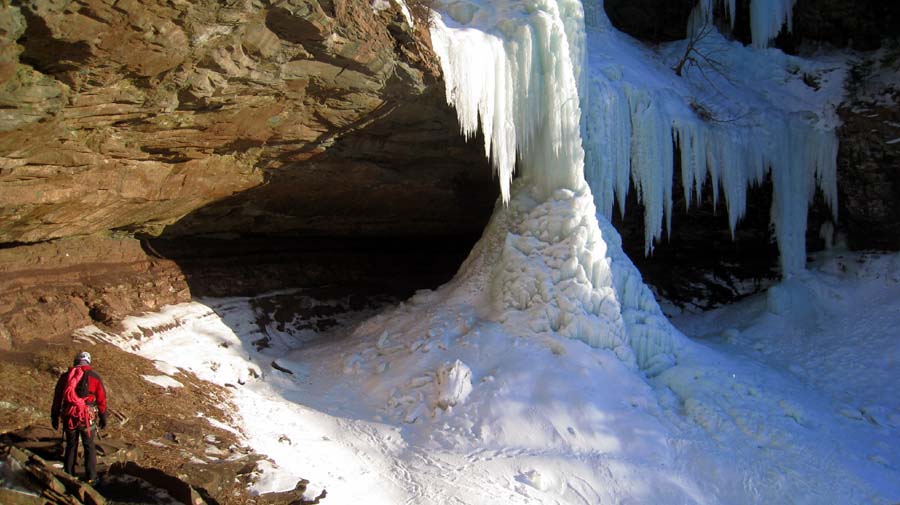
Aaron climbing Rainbow Falls (WI4)

Rainbow Falls. Click to enlarge.

Corinna sending Rainbow Falls Left

Corinna sending Rainbow Falls Left

2011 is shaping up to be a good year.

I spent today with Northwest Mountain School guest Corinna on some great ice up in Icicle Canyon, a mere five minutes from town.  We spent the day on Rainbow Right (WI3, 35-45M) and Rainbow Left (WI4, 25m), each of which had fantastic plastic ice and are just ten minutes from the parking lot!

Enjoying a lap on Rainbow Right

Enjoying a lap on Rainbow Right

The ice is growing in Leavenworth and most of the routes are in climbable shape.  Contact me for details or to go climbing this winter.  Here’s to 2011!

Topping out on Rainbow Gully

Corinna topping out on Rainbow Gully

Leave a comment

Here are a couple of the best photos of the last few days of my trip with Dustin. All are taken in the Catskills of New York State.

Dustin soloing up the first pitches of Buttermilk Falls.

Dustin rappels off Buttermilk Falls, NY.

The next photos are on Kaaterskill Falls–the tallest free-falling waterfall in New York. It was going to fall down, so we just did the approach pitch and enjoyed the grandeur of the place.

Find Dustin for some scale!

On our last day we went to the Devils Kitchen. We scrapped our way up a couple classic ice lines and a mixed route before being too pumped to get anything else done!

Me leading “Mephisto Waltz” in Devil’s Kitchen.
Leave a comment

I’ve witnessed three leader falls in my ice climbing career. I think of leading ice a lot like I think of free soloing–falling is not an option. Sure you have a rope on and it’s attached to what you’re climbing at (hopefully frequent) intervals, but falling is a bad idea since you will most likely get really, really hurt.

The first fall I saw was a 30′ fall on Twin Falls in Hyalite Canyon, Montana. The leader was about 45′ up the opening pitch (WI3) and pitched off, head first, onto a medium length screw that did not have a screamer on it. He came to a stop a couple feet above the ground, but downhill from his belayer. For those of you with technical interests, that’s a fall factor of greater than 1. It’s amazing that his screw even held. He walked away unscathed, but probably had to change his shorts after almost decking.
The second was at the Junkyards, just outside Canmore, Alberta. The leader had just topped out on a short curtain, placed a screw, and was moving up to sling the anchor tree. He was fiddling with the leashes on his tools and popped off feet first…initially. Then he caught his last screw with his crampon, tweaked his ankle, and flipped upside down for about a 15′ fall. Surprisingly, even after watching his ankle bend well beyond its normal range, he didn’t break it.
Two days ago, however, I saw the worst ice climbing fall I’ve ever seen. The leader was on the final pillar of “Power Play” at Chapel Pond in the Adirondacks of New York. He was about 60′ out from the belay on very dense (pick breaking density) WI4 ice. As he tried to place a screw, he pitched off and free fell 40′ onto lower angle ice below his belayer before his screw caught him. He hit on his back and head, breaking his helmet, dropping his tools, and going unconscious. Fortunately the screamer on his screw kept his piece in, otherwise he would have factor 2’d onto the belay. As he lay there unresponsive, bleeding out of his head, all of the nearby parties started to mobilize. Fortunately, after what seemed to be an eternity, he righted himself and “batmanned” up the rope to the belay where his partner lowered him to the ground. He was a very lucky man that day. We saw him yesterday morning, buying a new helmet and wondering how he even fell. He kept saying “I had it in the bag”…no, you didn’t. You fell and are lucky you didn’t die since you fell 40′ onto your head.
The good news of all of this is that ice screws actually do work. OK, so if screws work, then why all of this diatribe about not falling? Good question. Falling on ice is a bad idea with all of those sharp objects attached to you. Crampons are good at catching and breaking ankles in even the shortest falls (I know a guy who fell less than 10′ and broke both ankles simultaneously). Ice tools can cut ropes and puncture soft tissues readily (read Mark Twight’s story about putting an ice tool through his cheek). Not to mention that you’re likely to be running it out, so falls are way longer than those on rock climbs, meaning you’re more likely to hit things while you accelerate at 9.8m/s/s.
So what can we do about it? All of these falls would have had much less severe consequences if the leader had protected himself better–be it clipping in before building an anchor or placing screws more often, especially when just above ledges. So…protect early and often on pitches. Place screws in good ice, especially in concavities. Use screamers on the first few pieces off the belay. Tie your belayer down and out of the firing line of falling ice. Don’t fall. Period.

Leave a comment