It’s been about a month since this event took place. I’ve thought a lot about how to tell the story and about how the event has affected me, my guiding, my personal climbing, and my life. More on all that later.
Be careful out there.
—
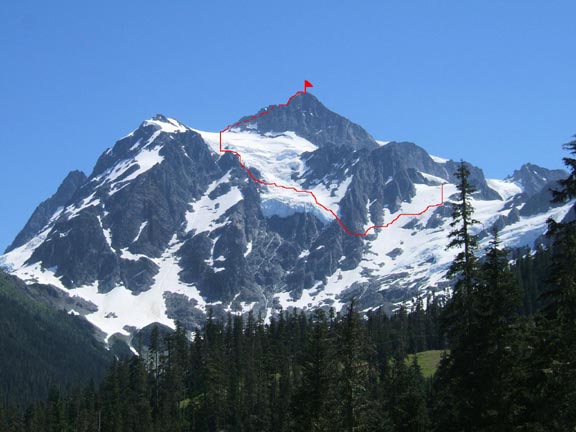
September 16: Day 1 of the AMGA Advanced Alpine Guides course. After a short briefing, we are headed off to climb Mt. Shuksan via the Fisher Chimneys. The plan is to hike in, ascend the chimneys, and bivy at their top. Day two will then be spent on guiding skills for glaciated terrain and an ascent of the mountain, via Hells Highway and the summit pyramid. Day three will cover crevasse rescue and hike out. Sounds like a great plan.
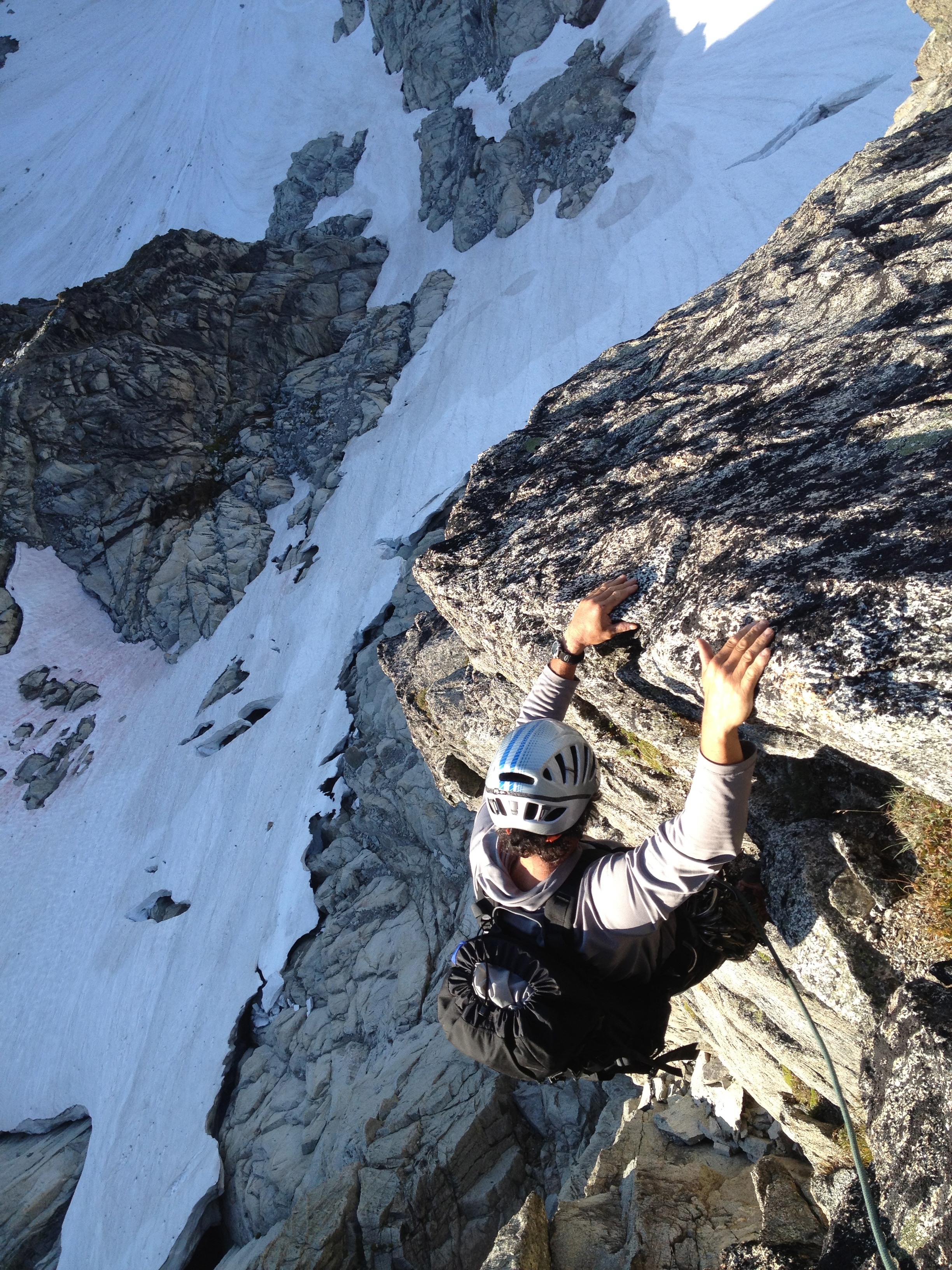
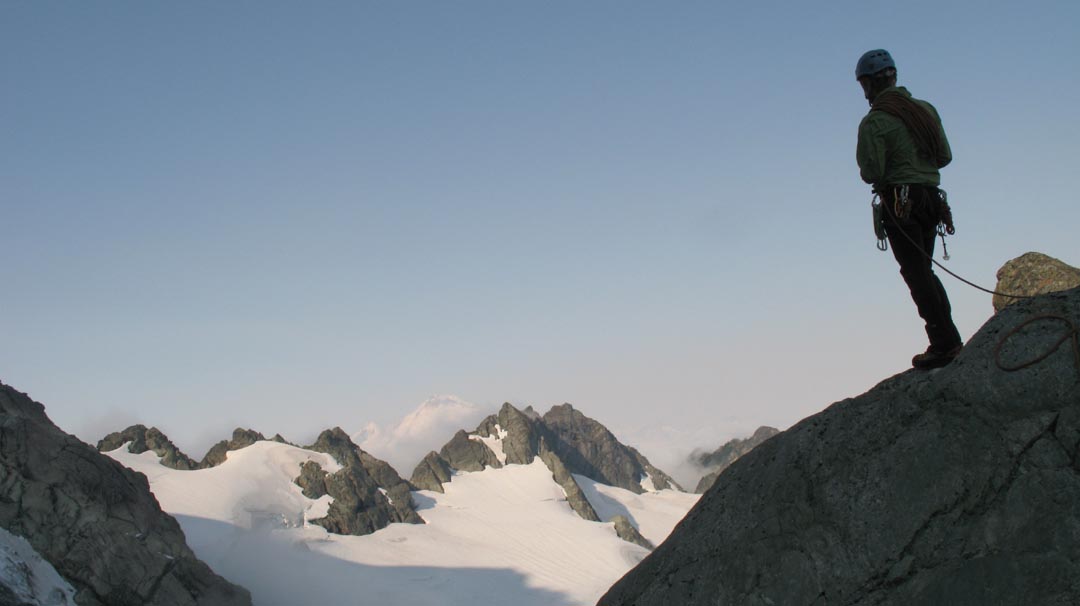
The hike is familiar and easy, even with Marc’s blistering pace up to Lake Anne. Once we reach the Chimneys we transition from hiking to instructional mode as we practice short-roping up the Chimneys. (Short roping is a guiding technique similar to simulclimbing, where the team’s security comes from the stance and ability of the leader to check a slip before it becomes a fall). Rain spits down on us periodically, but we reach and establish camp before the deluge hits.
The night is a long one. It’s rainy and windy and our Megamid flaps constantly through the first half of the night. The maelstrom soon passes and we poke our heads out to see a beautiful array of stars…and chilly temperatures. Tomorrow will be an excellent day in the mountains.
September 17 / Day 2:
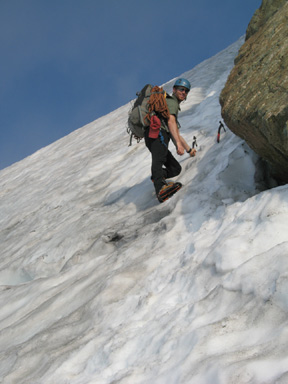
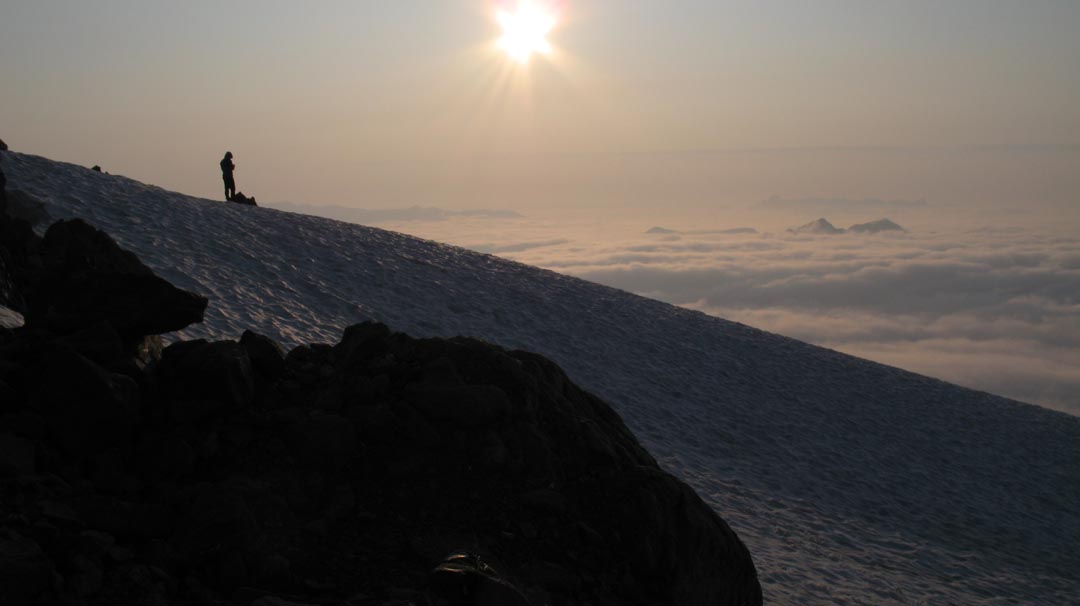
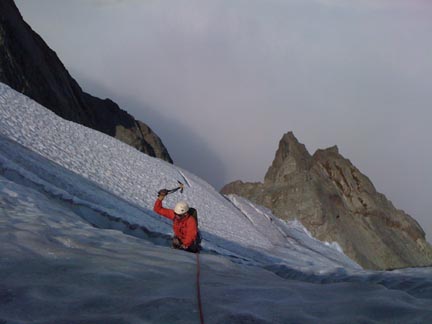
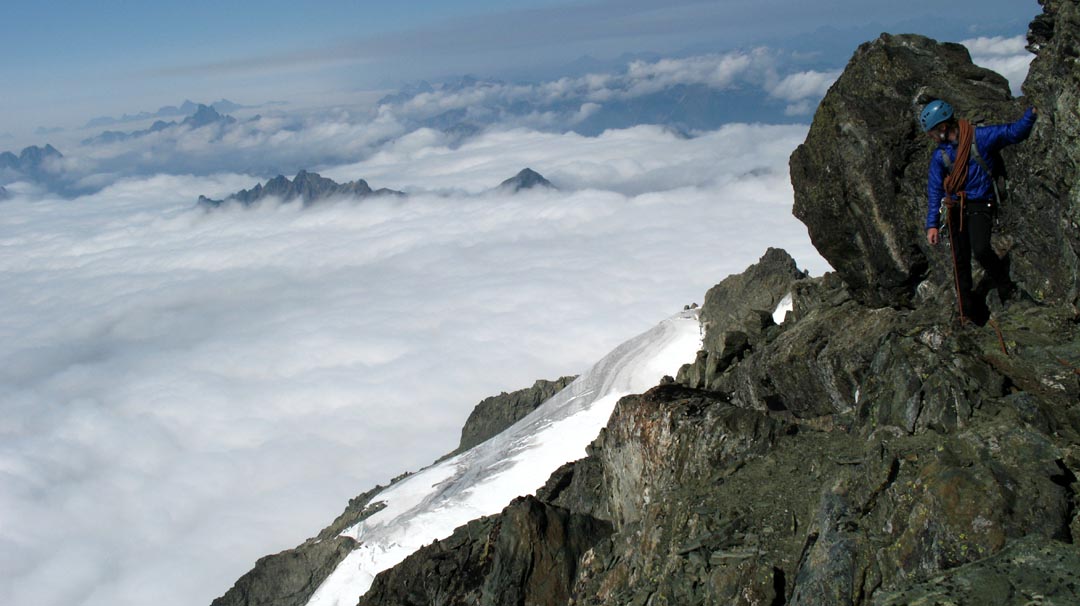
My watch says it’s 28 degrees outside. I’m not particularly stoked to get out of my sleeping bag, but I never really am when it’s cold. After the morning routine, our group cruises up Winnie’s Slide. Winnie’s Slide has changed dramatically in the past month, going from easy step-kicking snow to bulletproof forty-five degree glacial ice with a sheen of water ice on top for good measure. Between the cold temperatures, dense ice, and too-thin gloves I chose to bring, I get the “screaming barfies” for the first time all year. This painful numbness soon subsides and I relax–enjoying the view to the west of Mt. Baker, illuminated with morning alpenglow.
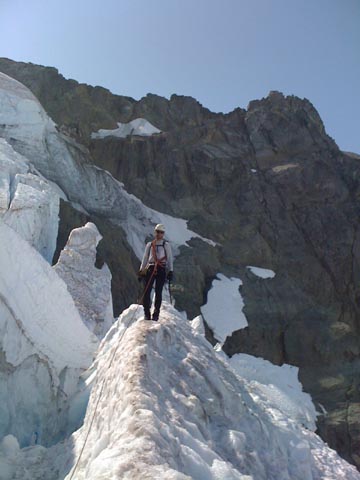
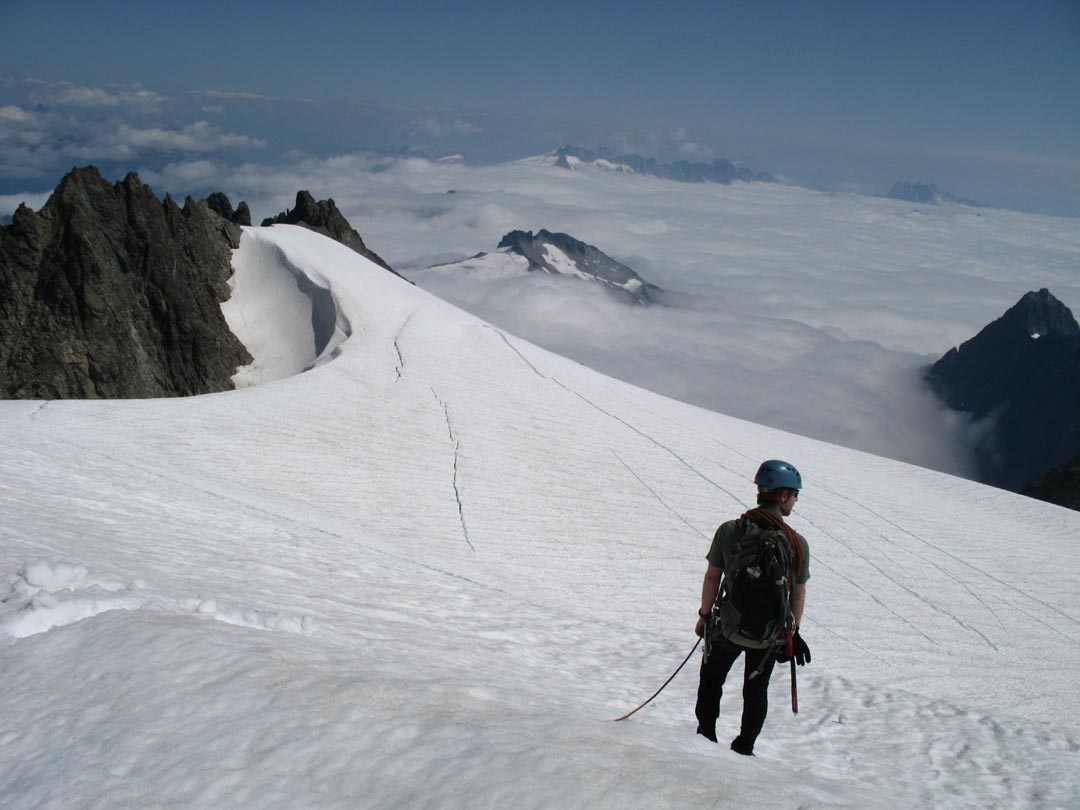
We traverse easy slopes and cross onto the Upper Curtis Glacier. After a couple of belayed pitches up the approach ramp and some short-roping, we extend the rope into glacier travel mode. Rob is out front, I’m in the middle, and Chris in the back. Two other rope teams from our party are just behind us. The atmosphere is collegial and we’re all psyched to be in the hills. We wander past a few small crevasses until a large crevasse causes us to pause and ponder the route ahead. Rob guides us along as we navigate to the narrowest part of the crevasse and we find a solid bridge to cross. Once across, we’re traversing now, paralleling two large crevasses on a wide bench of ice. The ground is nearly flat under my feet.
CRACK!
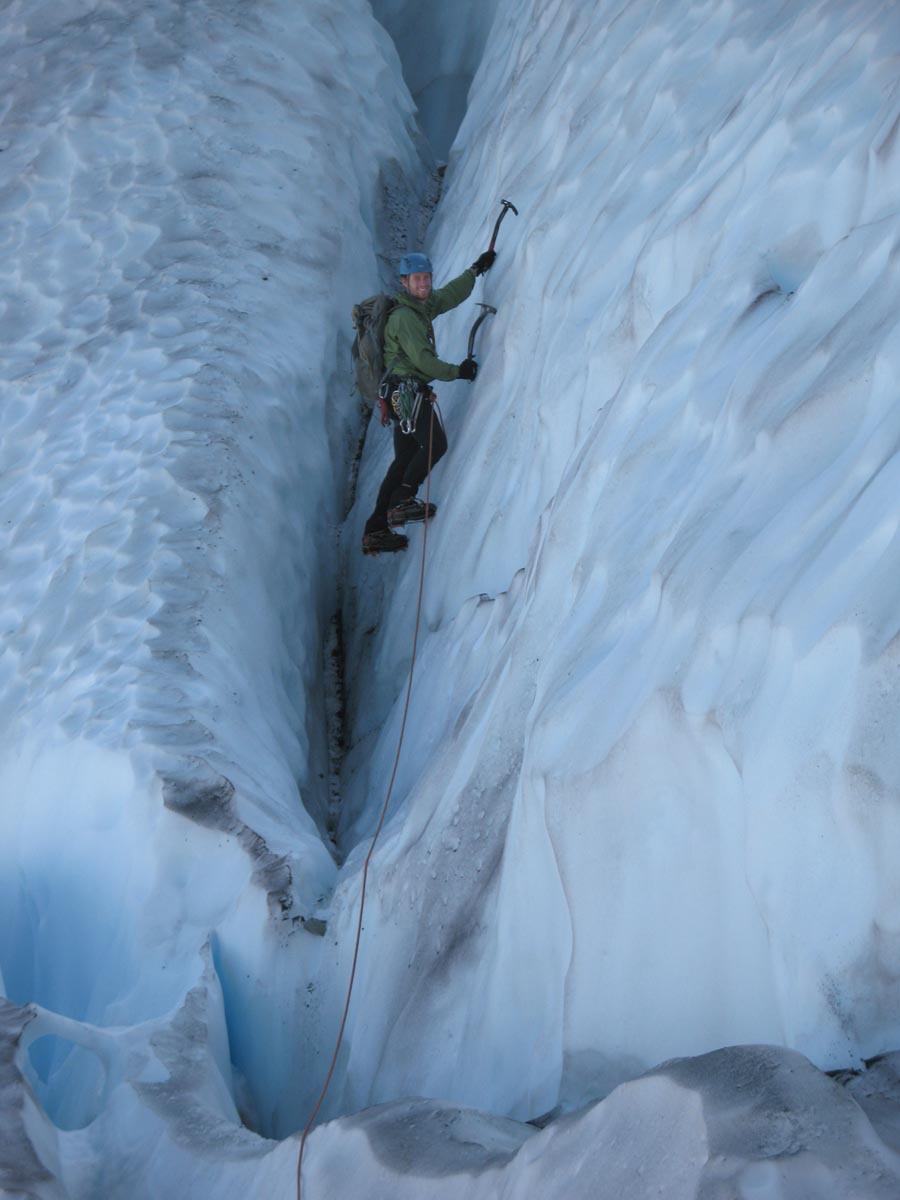
I watch in horror, but am strangely calm, as the glacier splits between my feet. The crack propagates in front of me for nearly fifty feet. I’m falling. I can see the size of the serac I’m falling with. It’s 8′ wide (I was about 8′ from the lip), 60′ long, and is about 10′ deep. “Uh oh, this is going to be bad,” I think to myself. I watch the blocks crack and tumble just below me, expecting to see Rob get catapaulted off the lip in front of me. Somehow he doesn’t.
A searing pain tears through my left knee as the rope comes tight. Rob and Chris have arrested my fall after fifteen feet, which is simply amazing given the conditions on the glacier. I’m positioned like a track hurdler–my left leg contorted up and behind me, caught on a small ledge. I need to unweight the rope and my leg. I claw my way up onto the tiny ledge and try to make sense of what just happened.
I hear my ropemates above and yell to them that I’m going to try to climb out. I try to raise my left leg, but a blinding pain shoots through it. Maybe I’ll take a smaller step. That doesn’t work either and I slump back onto the ledge. Uh oh, I’m going to need a helicopter to get off this mountain. Soon Marc pops his head over the lip, we chat about my knee and he drops me a rope so they can haul me out. The hauling goes fast and I’m out of the crevasse in under three minutes from the time I went in.
We move away from the crevasse, inspect ourselves, and discuss the situation. It’s an interesting position to be in: surrounded by other professional guides, on day two of a twelve day course that I had spent months preparing for, and no visible injury. There’s no swelling or bruising in my knee, but I know that it’s game over for me on this trip. Chris somehow produces a neoprene knee brace out of his pack and I painfully wrestle it on. Time to go down while I can still walk.
The descent back to camp is uneventful, albeit painful. I jettison most of my belongings for the group to bring down before Vince and I descend the Chimneys at a surprisingly good pace. My knee is less painful on the downhill it seems. At the base, Vince returns to the group and I hike out alone to the trailhead, realizing along the way that the harder part of the journey is about to begin.
—-
It’s been almost a month since I took my ride into a crevasse. I can finally put shoes on by myself, but it’s painful and I prefer flipflops. Stairs are daunting, but I push myself to use them instead of staying inside all the time. I’ve seen a variety of medical folks, none of whom can tell me exactly what’s wrong inside my knee. The MRI is scheduled for next week. I hope it’s not going to require surgery, but given the intensity of the pain that is still present, I’m not keeping my hopes up.
—
Analysis: Our group was as technically proficient and experienced as are ever found in the mountains. We were on the safest terrain on the glacier and happened to be in the wrong place at the wrong time. We attributed the size of the ice/ serac fall to the rain and subsequent hard freeze the previous night, placing an unusual amount of tension in the ice. I must have been the last straw.
It is often suggested to travel unroped on dry, late season glaciers since A) an unexpected fall is unlikely and B) self-arrest is difficult. I’m really glad I was roped up and my teammates were both able to arrest (both with serious effort). The outcome would have been much worse if we had been unroped.



 Kurt Hicks | IFMGA Mountain Guide